
In today’s world of smart homes and hygiene-focused living, sensor taps have quickly moved from luxury hotels and airports into everyday homes, offices, and commercial spaces. But the big question remains: are sensor taps actually worth the investment?
The answer depends on how you evaluate benefits, upfront cost, and long-term savings. In this detailed guide, we’ll break everything down so you can make a clear and confident decision.
What Are Sensor Taps?
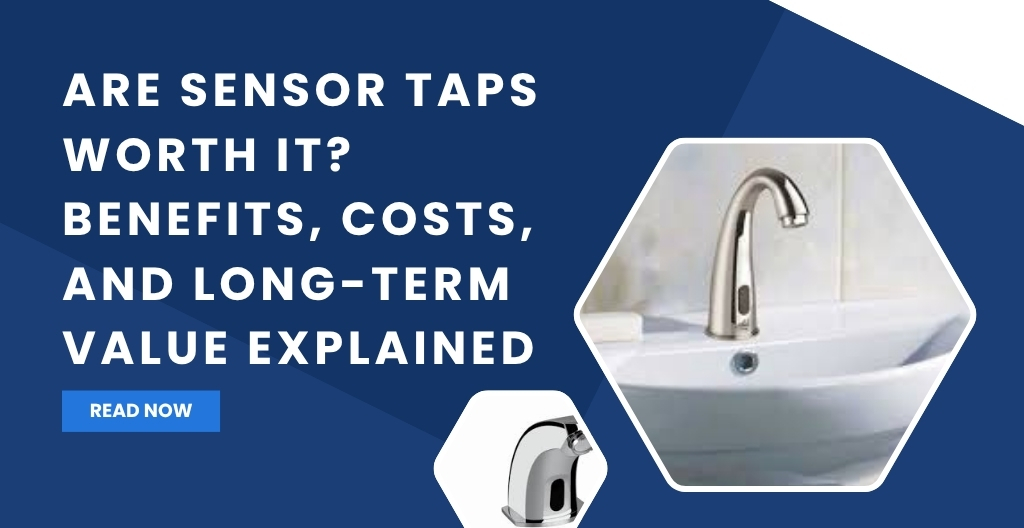
Sensor taps, also known as automatic or touchless taps, use infrared or motion sensors to detect hand movement. Water flows automatically when your hands are placed under the tap and stops when you remove them.
Unlike traditional taps, they require no physical contact, making them a modern solution for hygiene and water efficiency.
Key Benefits of Sensor Taps
1. Superior Hygiene and Germ Protection
One of the biggest advantages of sensor taps is touchless operation. You don’t need to touch handles that may carry germs or bacteria.
- Reduces cross-contamination significantly
- Ideal for homes, offices, hospitals, and public spaces
- Helps maintain better sanitation in shared environments
Studies show that manual taps are major contact points for bacteria, while sensor taps eliminate this issue completely.
This is especially valuable post-COVID, where hygiene awareness has increased drastically.
2. Significant Water Savings
Sensor taps are designed to release water only when needed, which prevents wastage.
- Can save up to 50–70% water compared to manual taps
- Stops automatically when not in use
- Prevents dripping and human error
For example, a manual tap can waste liters of water if left running, while sensor taps shut off instantly.
Over time, this leads to noticeable savings on water bills.
3. Long-Term Cost Efficiency
While the initial price of sensor taps is higher, they offer long-term financial benefits:
- Lower water bills
- Reduced maintenance costs
- Less wear and tear
Many businesses recover their investment within a few years due to water savings and reduced operational costs.
In high-usage areas like offices or hostels, the ROI is even faster.
4. Convenience and Ease of Use
Sensor taps make everyday tasks easier:
- No need to turn knobs with dirty or wet hands
- Ideal for kitchens while cooking
- Helpful for children, the elderly, and differently-abled users
They offer a hands-free experience, making daily routines smoother and more efficient.
5. Modern and Premium Aesthetic
Sensor taps add a sleek, futuristic look to bathrooms and kitchens.
- Enhances interior design
- Matches modern and smart-home setups
- Creates a premium feel
This is why they are commonly used in luxury homes, hotels, and high-end offices.
6. Lower Maintenance Over Time
Sensor taps typically have fewer moving parts, which reduces wear and tear.
- Less frequent repairs
- Longer lifespan
- Minimal leakage issues
Compared to manual taps, which are constantly turned on/off, sensor taps experience less mechanical stress.
Costs of Sensor Taps
1. Higher Initial Investment
The main drawback of sensor taps is the upfront cost:
- More expensive than manual taps
- Cost varies based on brand, features, and quality
- Installation may require professional help
This higher price is due to advanced technology and sensor components.
2. Power Requirement
Sensor taps require a power source:
- Battery-operated or electric models
- Batteries may need replacement periodically
- Electric models depend on a power supply
This adds a small ongoing cost but is generally minimal.
3. Installation and Compatibility
Upgrading from a manual tap may require:
- Plumbing adjustments
- Professional installation
- Compatibility checks
However, modern models are becoming easier to install.
4. Sensitivity Issues (Occasional)
In low-quality models, you may experience:
- Delayed response
- False activation
- Sensor misalignment
Choosing a good-quality brand usually eliminates these issues.
Sensor Taps vs Manual Taps: Quick Comparison
| Feature | Sensor Taps | Manual Taps |
| Hygiene | Excellent (touchless) | Moderate |
| Water Saving | High (up to 70%) | Low |
| Initial Cost | High | Low |
| Maintenance | Low | Moderate |
| Convenience | High | Basic |
| Long-Term Cost | Lower | Higher |
While manual taps are cheaper upfront, sensor taps clearly win in long-term efficiency and hygiene.
Long-Term Value of Sensor Taps
When evaluating whether sensor taps are worth it, the long-term value outweighs the initial cost.
1. Environmental Impact
- Saves thousands of liters of water annually
- Supports sustainable living
- Reduces energy used in water processing
deal for eco-conscious homes and businesses.
2. Financial Savings Over Time
Even though you spend more initially, you save money through:
- Reduced water bills
- Fewer repairs
- Lower replacement frequency
Over 2–5 years, the cost difference often balances out.
3. Better User Experience
From convenience to hygiene, sensor taps provide a superior daily experience.
- Cleaner usage
- Faster handwashing
- No mess or dripping
4. Ideal for High-Traffic Areas
Sensor taps are especially worth it in:
- Offices
- Hostels
- Restaurants
- Public washrooms
Because usage is high, savings and benefits multiply quickly.
Are Sensor Taps Worth It for Homes?
For residential use, sensor taps are worth it if:
✔ You prioritize hygiene
✔ You want to save water
✔ You prefer modern interiors
✔ You don’t mind a higher upfront cost
However, for low-usage areas, manual taps may still be a budget-friendly option.
Are Sensor Taps Worth It for Businesses?
For commercial spaces, sensor taps are highly recommended:
- Faster ROI
- Better hygiene standards
- Lower operational costs
- Improved customer experience
Businesses benefit the most from installing sensor taps.
Final Verdict
So, are sensor taps worth it?
Yes—especially for long-term value, hygiene, and water savings.
While the initial investment is higher, the benefits far outweigh the costs over time. Whether for a modern home or a high-traffic commercial space, sensor taps offer a smart, efficient, and future-ready solution.
FAQs About Sensor Taps
1. Do sensor taps really save water?
Yes, sensor taps can save up to 50–70% of water by automatically shutting off when not in use.
2. Are sensor taps expensive?
They are more expensive upfront than manual taps, but they save money in the long run through reduced water and maintenance costs.
3. Do sensor taps need electricity?
Yes, they run on batteries or electricity, depending on the model.
4. Are sensor taps suitable for homes?
Yes, they are great for homes, especially kitchens and bathrooms where hygiene and convenience are important.
5. Do sensor taps require maintenance?
They require minimal maintenance, mainly battery replacement and occasional sensor cleaning.
6. Can sensor taps malfunction?
Low-quality models may have sensitivity issues, but high-quality sensor taps work reliably.
7. How long do sensor taps last?
With proper care, sensor taps can last many years due to fewer moving parts and reduced wear.
8. Are sensor taps worth it for small families?
Yes, if you value hygiene and water savings. However, the ROI is higher in larger households or commercial setups.